Black and Grey Bedrooms: A Realtor's Staging Guide

Professional photography matters more than a dark paint trend by itself. One real-estate photography source reports that 85% of buyers say listing photos are very useful for their decision-making process, while listings with professional photos receive 61% more views than those without them and homes with high-quality photography sell 32% faster (DeVore Design's real-estate photography data). For agents, a black and grey bedroom is therefore not a decorating choice. It's a controlled visual decision that can either give a listing depth and distinction or make the room look smaller, colder, and harder to live in.
Why Black and Grey Bedrooms Matter for Listings
Black bedrooms have moved well beyond niche design territory. A 2024 interior-design trend signal found that “black bedroom” searches reached just under 400,000 annually worldwide, making black the most-searched bedroom paint color in that comparison and placing it ahead of white, green, pink, and blue (the interior color trend analysis). The same analysis identified growing interest in charcoal and dark grey, which makes the combination especially relevant to agents targeting buyers who respond to dramatic, contemporary interiors.
Search interest doesn't guarantee buyer approval, but it gives the palette market authority. A well-presented black and grey bedroom can look intentional, architectural, and expensive in an MLS gallery, particularly when the room has strong proportions, good natural light, or premium finishes. It can also help a listing avoid the anonymous appearance created by an entirely white or beige staging package.
The photography opportunity is significant because the bedroom is already a high-priority staging space. NAR-based staging data places the primary bedroom at 78%, behind only the living room at 90% and kitchen at 80% (NAR-based staging data summarized by Stucco). That makes the bedroom a practical place to refine, not an afterthought.

Where the palette gains value
The strongest listings use black and grey to create a clear focal point. A charcoal upholstered bed, a restrained black frame, or dark bedside lighting can draw the eye toward the room's usable layout. Grey then keeps the composition open enough for the camera to preserve wall boundaries, bedding detail, and floor area.
The 2026 design conversation is divided. Some coverage argues that cooler greys are losing favor as buyers move toward warmer, more characterful bedrooms, while other coverage presents charcoal and black as cocooning and luxurious when carefully balanced (Ideal Home's 2026 bedroom color discussion). I treat that split as a staging warning, not a reason to reject the palette. A flat, blue-grey room may feel dated, while a warm grey foundation with tactile fabrics and selective black accents can read current.
Agent's rule: Use black and grey to frame the room's best features, not to hide weak light, awkward furniture, or limited floor space.
For agents who need a broader bedroom preparation workflow, this bedroom staging guide provides a useful companion process. The key is to evaluate the actual photo first. If the room already looks compressed through the lens, adding more black won't create sophistication. It will amplify the problem.
Choosing Shades and Textures That Photograph Well
The most reliable black and grey bedrooms aren't built from one dark paint color. They use layers of value, undertone, and texture so the camera can separate the bed from the wall, bedding from the mattress, and furniture from the floor.
Start with a light-to-medium grey on the largest surfaces. This might be the wall color, a substantial rug, or the dominant bedding field. Then bring in darker grey through the duvet, upholstered headboard, curtains, or occasional chair. Pure black should stay comparatively limited, appearing in hardware, picture frames, lamps, a slim bed frame, or a few carefully chosen accessories.
That approach follows the familiar 60-30-10 balance rule, with roughly 60% of the room in the dominant grey, 30% in a secondary grey or neutral, and 10% in black or another accent. It's a staging proportion, not a rigid formula, but it prevents the most common visual error: allowing black to occupy so much surface area that the room closes in.

Match undertones to the light
A room with limited daylight usually benefits from a warm grey on its largest surfaces. Greys with beige, taupe, or subtle brown undertones prevent the walls from looking icy when photographed. In a brighter room, a cooler slate grey can work, but check it at different times of day before recommending it to a seller.
North-facing rooms deserve particular care because their daylight can make cool pigments feel blue. Dark colors can work effectively in these spaces, but the surrounding materials need warmth. Wood, cream bedding, brushed brass, and warm lamps give the eye somewhere to move when the walls absorb light.
The practical test is to photograph sample boards, not just inspect paint chips. Place warm and cool grey swatches near the window, beside the headboard, and under the existing light fixtures. A shade that looks elegant in person may turn blue or muddy on camera.
Give the lens something to capture
Texture creates separation without adding visual clutter. Pair matte walls with linen bedding, a woven throw, velvet cushions, a boucle bench, or a subtly ribbed lampshade. The surfaces don't need to match. In fact, a room filled with identical grey fabrics often photographs as a single flat block.
Avoid high-gloss black across broad surfaces. It creates distracting reflections, especially near windows and lamps, while matte black hardware keeps edges crisp. Rugs should define the bed zone without swallowing the floor, and artwork should introduce tonal variation rather than another large field of darkness.
Photographic test: If the bedding, wall, and upholstered bed merge into one grey shape in a test image, change texture or contrast before adding more accessories.
Furniture Selection and Layout for Maximum Impact
Furniture determines whether a dark bedroom feels composed or crowded. Paint can establish mood, but the bed, nightstands, and walking paths determine what buyers understand from the first listing image.
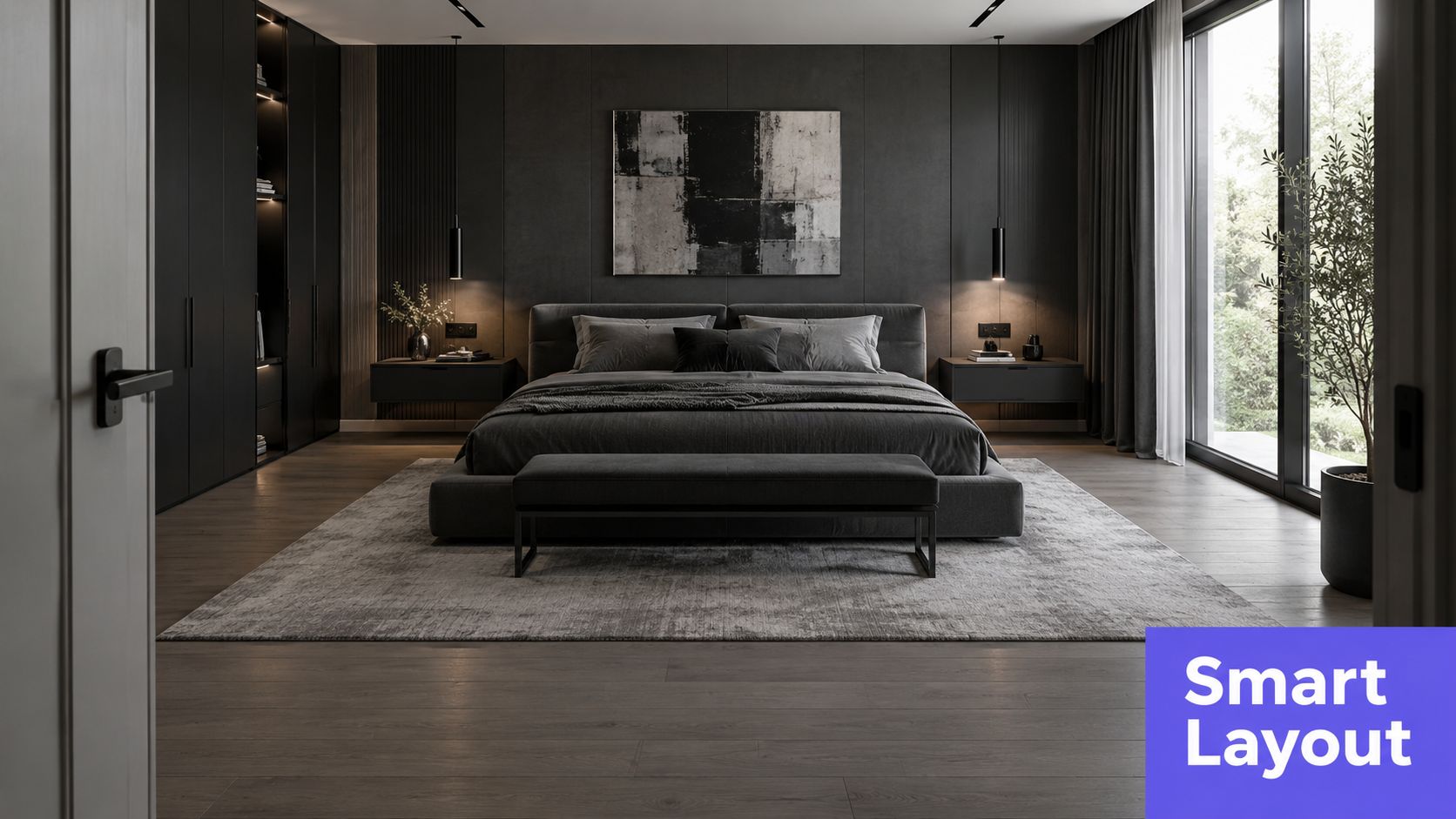
Place the bed where it reads immediately from the doorway, which is often the primary shooting angle. A low platform or upholstered bed anchors the composition without blocking too much wall. A tall, heavily carved headboard can dominate a small room, particularly when it's dark, while a charcoal fabric frame adds depth with softer edges.
Keep the nightstands visually balanced, but don't default to a matching bedroom suite. Two identical bulky pieces can make the room feel narrower. A slim black metal table on one side and a warm wood nightstand on the other can create variation while maintaining symmetry through height and lamp scale.
Build a clean sightline
Photographers need enough open floor to show scale. Pulling every piece tightly against the walls doesn't necessarily make a bedroom look larger. It can create dead corners and make the arrangement seem accidental.
Instead, prioritize the bed wall, then place secondary furniture where it supports the frame:
- Bed placement: Center the bed on its strongest wall when the architecture allows it, leaving visible circulation on both sides.
- Nightstand scale: Choose pieces that sit comfortably below or near the mattress height rather than tall cabinets that compete with the headboard.
- Bench positioning: A narrow upholstered bench at the foot of the bed can signal comfort, but remove it if it blocks the room's longest floor line.
- Chair use: Add one sculptural chair only when it fills an empty corner without becoming a storage drop zone.
- Dresser location: Keep dressers away from the immediate doorway sightline if they interrupt the bed's visual anchor.
Mirrors can bounce window light and expand the composition, but placement matters. A mirror facing a blank dark wall contributes little. A mirror angled toward the window or a lighter adjacent surface can lift the image without making the room feel shiny.
For a more specific look at the bed as a visual anchor, this modern black bed guide can help agents and sellers compare frame choices. The goal isn't to fill the room. It's to make the available space legible in one glance.
Lighting Strategies That Make or Break the Photo
Lighting decides whether black and grey bedrooms look luxurious or lifeless. Dark materials need enough illumination for the camera to record their texture, but harsh light can flatten the palette and create unattractive glare.
Use warm-white bulbs in the 2700K to 3000K range. This range keeps grey from reading excessively blue or sterile and supports the warmer, more inviting mood buyers generally expect from a bedroom (practical grey-bedroom lighting guidance). Replace mismatched bulbs before the photographer arrives. A cool ceiling fixture combined with warm bedside lamps can create competing color casts across the same frame.
Layer the sources
Turn on every useful light source before shooting, then assess the image from the camera position. Ambient light should provide general visibility, task lighting should illuminate the bedside areas, and accent lighting should reveal texture on the headboard, artwork, or architectural details.
A dimmer-controlled ceiling fixture gives the photographer more control over contrast. Bedside lamps should sit far enough from the wall to prevent a hard halo, and their shades should diffuse the bulb rather than expose it directly. If the room has recessed spotlights, angle them toward bedding texture or artwork instead of aiming them at glossy surfaces.
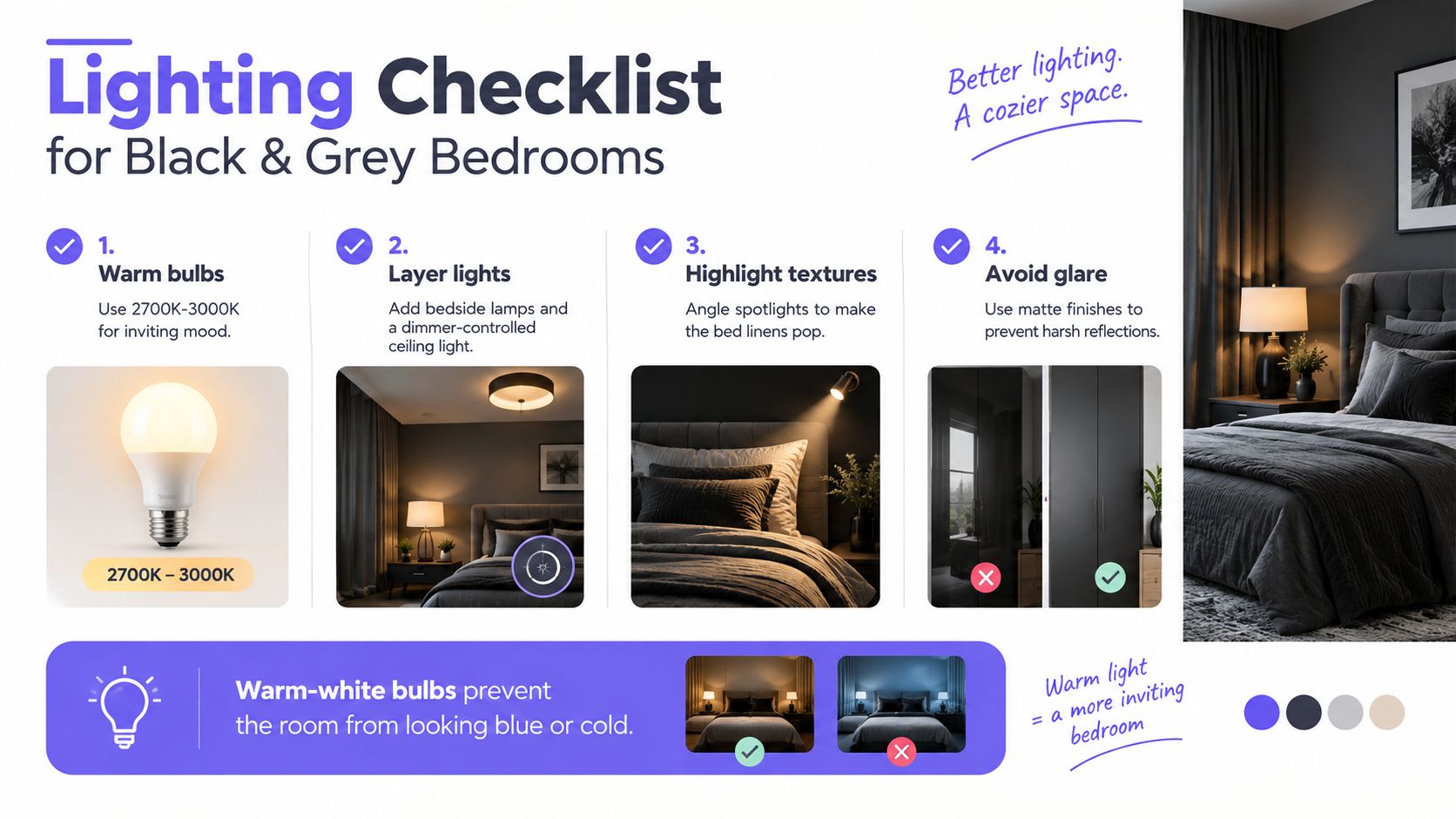
Lighting check: Warm bulbs, multiple layers, and controlled reflections matter more than adding another decorative fixture.
Window treatments should preserve daylight for the main photos. Open blinds fully when the exterior view adds value, and use simple roller shades or neatly positioned curtains when glare or privacy is a problem. Heavy dark curtains can make an already low-light room look sealed, especially when they cover most of the window.
Use a tripod and consistent exposure across the bedroom set. Avoid editing the shadows so aggressively that black furniture loses its edges. Buyers need to see the actual floor area, corners, window openings, and furniture position, not a heavily stylized interpretation.
The short visual checklist below reinforces the placement and bulb decisions that affect the final frame.
For additional ideas when a room has weak daylight, this guide to brightening dark rooms offers practical ways to increase perceived light without abandoning a moody palette.
Virtual Staging Workflows for Black and Grey Bedrooms
Virtual staging works best when the agent treats it as a presentation workflow, not a way to cover an unprepared room. Start with the original photograph. Remove visible clutter, personal items, loose cables, laundry, and dated furniture before applying a new design. If the empty room has poor perspective or blocked windows, a digital sofa won't solve the underlying image problem.
Begin with the room, not the furniture
Capture the room from a natural doorway or corner angle, keeping vertical lines straight. The image should show the floor, windows, ceiling height, and door openings clearly enough that the final furniture feels credible. An empty room with accurate geometry gives a virtual staging system much better information than a cluttered room with hidden walls and partial floors.
Then choose a restrained design direction. A useful plain-English instruction might be:
Add a charcoal upholstered bed with warm grey linen bedding, slim black metal nightstands, soft bedside lamps, and a textured neutral rug. Keep the existing architecture, window positions, perspective, and natural light direction unchanged.
That prompt defines the palette while protecting the elements that make the image trustworthy. Avoid vague instructions such as “make it luxurious” unless you also specify the bed style, material, color relationships, and lighting mood.
Keep every listing image consistent
The bedroom should look like the same room from every angle. Use the same bed finish, bedding colors, nightstand style, rug, and lighting logic across the doorway view, window-side image, and detail shot. A charcoal bed in one image and a black metal frame in another immediately signals an artificial result.
Check scale carefully. The bed shouldn't block a radiator, float above the floor, overlap a doorway, or leave impossible clearance at the foot. Lamps should sit on the nightstands, rugs should follow the floor plane, and shadows should agree with the window direction. Buyers may not identify the technical error, but they'll feel that the room doesn't add up.
Stage AI is one tool agents can use for this workflow. It lets users upload listing photos, remove furniture and personal items, apply presets such as modern or farmhouse, or enter plain-English design instructions, then download high-definition results intended for MLS, print, and social use. Its real-estate-focused models are designed around furniture placement, lighting, and consistency, while its staging feed allows agents to reshare or restage prior work.
Review before publishing
Compare the staged image with the original and check that the architecture remains accurate. Virtual staging should show a plausible furnishing option, not imply renovations that haven't happened or conceal permanent defects.
Label digitally staged images according to the requirements of the relevant listing service and local practice. Keep the original photographs available for transparency, and use the staged version to help buyers understand scale, circulation, and design potential.
When to Use This Strategy and When to Avoid It
Black and grey bedrooms help marketability when the room has enough light, clear architectural lines, and a target audience that appreciates modern, understated interiors. They're especially effective when the palette supports a strong headboard, attractive flooring, large windows, built-in storage, or other details that deserve emphasis in the listing gallery.
The emotional response needs careful handling. Sleep Foundation explains that black absorbs visible light, which can support darkness in a sleep environment, but it also associates black with difficult emotions including depression, sadness, anger, and fear (Sleep Foundation's bedroom color psychology guidance). Mental Health America describes grey as calming and neutral, while warning that darker grey can feel emotionally detached or draining and that lighter greys can feel more hopeful and timeless (Mental Health America's color guidance). For staging, the conclusion is practical: darkness needs relief.
Use this quick decision check before recommending the look:
- Light: Does the room retain enough daylight and artificial illumination to show detail?
- Orientation: Will the natural light make the chosen grey warmer, colder, or visually flat?
- Architecture: Do the proportions and finishes support a deliberate, cocooning treatment?
- Audience: Is the listing aimed at buyers who value contemporary, high-contrast styling?
- Condition: Can the seller add texture, warmth, and uncluttered furniture, rather than only dark paint?
- Market context: Are local buyers responding to warmer layered neutrals instead of flat cool grey?
If several answers are unfavorable, recommend a lighter grey foundation with black accents instead of a fully dark room. That preserves contrast for photography while reducing the risk that buyers read the bedroom as cramped, dated, or depressing. Explain to sellers that their personal room can remain dramatic, but the listing image needs to communicate comfort, space, and possibility to people who haven't formed an emotional connection with the property.
A polished black and grey bedroom is a strategic option, not a universal formula. Use it when the room can carry the contrast, soften it with texture and warmth, and let the camera reveal the space rather than exaggerate its limitations.
For black and grey bedrooms, Stage AI can help you remove existing clutter, test charcoal and warm-grey furnishing schemes, and create consistent virtual staging across the listing photo set. Visit Stage AI to turn a clean room photograph into an MLS-ready design concept before you publish.